Winter is going and Spring is coming. Here are a few words from Geeta Iyengar to slow us down and remind us of the importance of sequencing our asana practice in a deliberate manner.
“the asanas are not picked up according to one’s whim and fancy. While sequencing, the body-intelligence is developed slowly so one understands the body. There is no chaos in its movement and functioning. The mind spreads gradually. The body becomes a universe for the mind to travel within. The intelligence expands to occupy each area to give the feel of space. The physical and mental health is built up slowly but positively. More than the body it is the mind that requires a gentle and careful approach. The dull element in the mind needs to be removed It requires stimulation but at the same time it should not be over stimulated. It should not be allowed to become hyperactive. One should be able to simulate as well as pacify it. The control to activate and pacify should be in your hand. The sequence teaches this adjustment and management. It develops a a yogic mind. The body and mind reach maturity for proper evolution in order to proceed towards involution.”
I remember the first thing I heard in an intro to Zen seminar, years ago: Don’t miss your Life. Don’t wait until you are dying to realize that your Life is happening right now. Wake up! Wake up! The teacher shouted.
Another teacher, in the yoga tradition adds: all you need to break a habit is to be present.
How useful these two practices are in steering a wandering heart or scattered mind in a singular direction. Many practices can aid us in living a full life and not a wasted one. If one of your practices is yoga, keep it up! If it is meditation, keep it going! Practices can lead us to a quieter connection inside ourselves that generate energy as powerful as the mountains we see and the rivers we hear. Energy we can use to help ourselves and others.
It is so good to be home in Fort Collins and teaching at the studio. I appreciate the attention you all gave to supta virasana while I was gone. I return from India with new information, lots of inspiration, and some wisdom on how to cross a street and practice yoga in a hall of 170 other students. The Iyengars are gifted in opening the student from the inside and out. If you can catch even a whiff of this sentence you will be amazed at the location of the real university of learning: it is inside you. Prashant often said: the real university is inside you, not some outside university you sign up for classes. Geeta often added: many of you traveled far to get here in India, but have you ever traveled from the crown of your head to your forearm in sirsasana? Why not start there? She is so right!!! See you in classes, Cathy
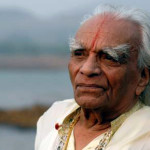
Welcome to the Iyengar Yoga Center of Fort Collins, a studio founded by Certified Iyengar Teacher Cathy Wright. The Iyengar classes that are taught here are in keeping with the BKS Iyengar method and spirit of Classical yoga. BKS Iyengar is the founder of a system of yoga that brings the alignment of the body under the watchful eye of your awareness. The yoking of the body to the vast field of awareness yields a rich and awakened life. Classes follow the format of the system used at the yoga studio in India. The first week consists of mostly standing poses, the second week of forward extensions, the third week back extensions, and the fourth week inversions and breathing. All classes have a balanced use of the body, with twists and abdominal work used throughout the month.
Asana practice is 1/8th of a comprehensive system of toning the body and concentrating the mind. The asana portion is deliberate and focused. In our class room setting classes begin on time and end on time. We discipline our tongues not to talk unnecessarily and our minds to be involved in sensations of stretch, pull, press, lift, soft, hard, light, heavy. The first two limbs in the yoga system require the student to be leading an ethical life. The third limb places one’s physical body into specific shapes and positions, called asanas. The fourth limb slows down the breath and makes it rhythmic. The fifth limb says, now that you have settled your life with some ethical consideration and settled your body from aches and pains, your breath is slow and steady, you now slip into the natural states of withdrawing from the noise around you. The final steps, pratyahara, dhrana, dhyama, samadhi, happen in a non-linear way. They are words that define the actual experiences of slowing down and not be caught in excessive thinking and drama. What it is like to be calmer, to have felt your true self, your connection to all things that live and breathe. From humans to animals and from stones to mountains and rivers and clouds and stars, the unity of all this is not abstract anymore, but real.
Don’t be confused!
Sit up straight, right now. Place your head squarely on top of your shoulders and draw your gaze to the back of the head. Breathe in from your nose, a steady and nourishing breath. A breath filled with gratefulness for your Life and the things that you still love to do. Let bodily tension and excessive thinking leave as you exhale.
A yoga practice is an invitation over and over to be present to ourselves and the greater world around us.
One purpose of yoga practice is to be completely one with the practice. Some transformation occurs each time we give ourselves over to a practice. The reward for setting aside time to practice, whether at home or in class, is big. It is so big that I can’t name it, or sell it, or even take it away from you. To find out for ourselves what our whole self is, is amazing. One teacher says “……..if you are brave enough to throw yourself in…….a little bit of understanding will help your rigidity and your stubbornness…….it is true that as long as we live we will have problems, so we don’t practice to solve our problems, but almost all the problems we create because of our stubborn mind, will vanish.”
Hmmmmmmm. Interesting. The yoga time is like a turtle going inside its shell to be calm. And when calmness is encountered, something big functions. One Zen teacher says:
“the six parts of the turtle are sometimes outside the shell and sometimes inside. When you want to eat or go somewhere, your legs are out, but if they are always out, your will be caught by something. The six parts refer to the five senses and the mind.”
Our yoga practice is “shell time”. We draw our attention inward and pacify the eyes, ears, nose, tongue, body and mind and when savasna is over, Big Mind is functioning.
We have a turtle pose that is worth practicing, it is called Kurmasana. Look it up and see what you can manage. Lets talk about it in class and make it part of our 2013 practice.
See you soon, safe and healthy,
Namaste, Cathy